Why GLP-1 Is Reshaping the Supplement Industry
GLP-1 has become one of the most talked-about mechanisms in metabolic health, and that conversation has moved well beyond pharmaceuticals. Supplement brands, formulators, and ingredient buyers are now actively searching for a
natural GLP-1 ingredient that can support appetite regulation, glucose metabolism, and sustainable weight management without a prescription.
This shift is creating strong demand for
GLP-1 support ingredients that work through the body’s own metabolic pathways. Consumers who are curious about GLP-1 biology but not ready for (or not candidates for) pharmaceutical intervention are actively seeking
natural alternatives to GLP-1 medications, and brands are racing to formulate around this demand with credible, science-backed ingredients.
For ingredient suppliers and manufacturers, this represents a significant opportunity: the brands that win in this category will be the ones that can back their formulations with real bioavailability data, not just marketing claims.
The Role of Berberine in Metabolic Health
Berberine has one of the deepest research bases of any botanical compound used in
metabolic health ingredient formulations. It has been studied for its effects on
glucose metabolism, insulin sensitivity, and lipid balance, and is increasingly positioned alongside GLP-1 pathway science as a nutraceutical option for
blood sugar support.
Mechanistically, berberine activates AMPK (AMP-activated protein kinase), a cellular energy sensor that plays a central role in glucose uptake and fat metabolism. This is part of why berberine is frequently discussed as a
GLP-1 nutraceutical option: its downstream metabolic effects overlap meaningfully with the appetite and glucose-regulating benefits associated with GLP-1 activity, without requiring injectable delivery.
For formulators building
GLP-1 supplement ingredient stacks, berberine’s multi-pathway activity makes it a natural anchor ingredient, provided the bioavailability challenge is solved.
Why Standard Berberine Falls Short
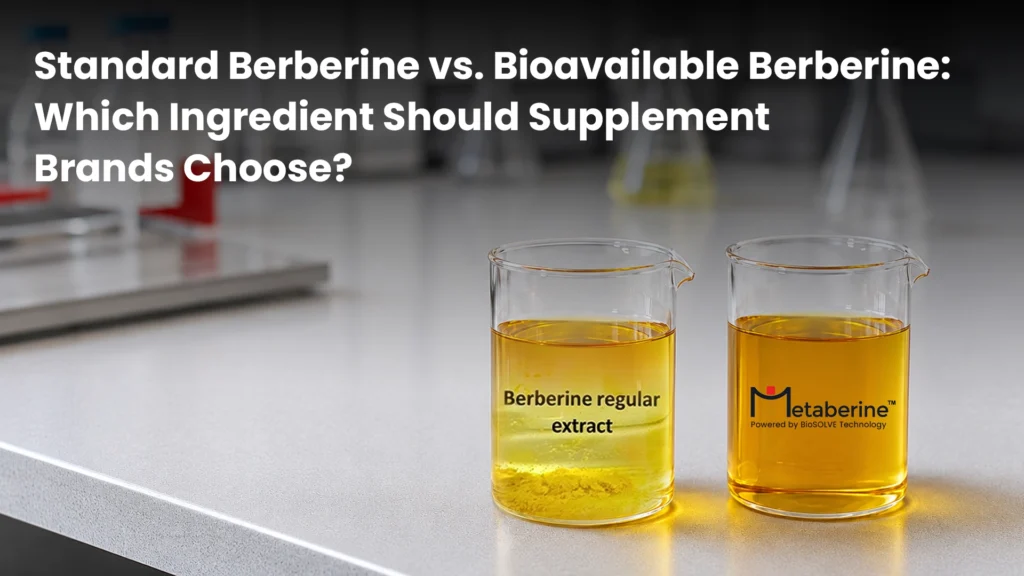
Despite the research interest, standard berberine has a well-documented limitation: poor oral bioavailability. Studies on berberine pharmacokinetics report absorption rates below 1%, largely due to poor solubility, efflux by intestinal transporters, and rapid first-pass metabolism. A widely cited
review of berberine bioavailability and pharmacokinetics outlines these absorption barriers in detail.
In practice, this means standard berberine formulations often require multi-gram daily doses split across several servings to achieve a clinically meaningful effect, which creates real problems for supplement brands:
- Large capsule counts hurt compliance and consumer experience
- High doses increase the likelihood of gastric discomfort
- Inconsistent absorption makes label claims harder to substantiate
- Higher raw material usage per serving increases formulation cost
For a
berberine ingredient supplier or brand trying to build a credible GLP-1-adjacent product, these limitations are disqualifying in a market that increasingly expects clinical substantiation.
How Bioavailable Berberine Improves Performance
This is where
bioavailable berberine technology changes the equation. Enhanced-delivery berberine extracts are engineered specifically to overcome the solubility and absorption barriers of the native compound, using techniques such as aqueous plant-based encapsulation, particle size reduction, or co-formulation with absorption enhancers.
The result is a berberine ingredient that can deliver a clinically relevant dose at a fraction of the milligram weight, translating into:
- Higher plasma concentrations of active berberine
- Faster onset of metabolic activity
- Lower effective daily dose, improving compliance
- Reduced gastric side effects associated with high-dose standard berberine
For brands formulating around
insulin sensitivity ingredient or
weight management ingredient claims, this bioavailability advantage is often the difference between a product that performs in the real world and one that only performs on paper.
Why Metaberine® Is Designed for Modern GLP-1 Formulations
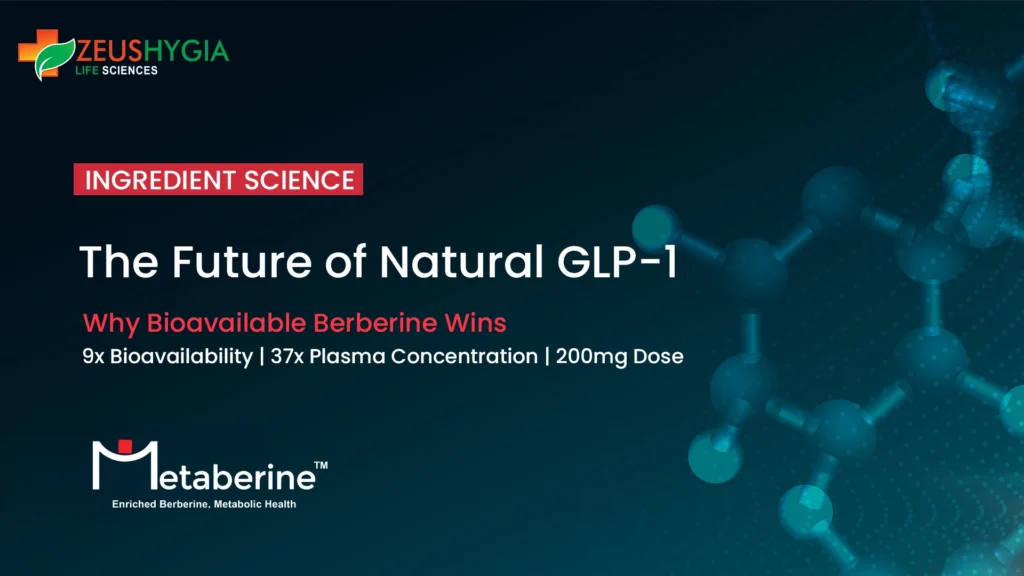
Metaberine® was developed by Zeus Hygia specifically to solve the bioavailability problem that has limited standard berberine for decades. Using our proprietary BioSOLVE™ technology, a clean-label, aqueous, plant-based delivery system, Metaberine® achieves substantially higher plasma concentrations of berberine at a fraction of the conventional dose.
Key differentiators for formulators evaluating a
Metaberine® bioavailable berberine ingredient include:
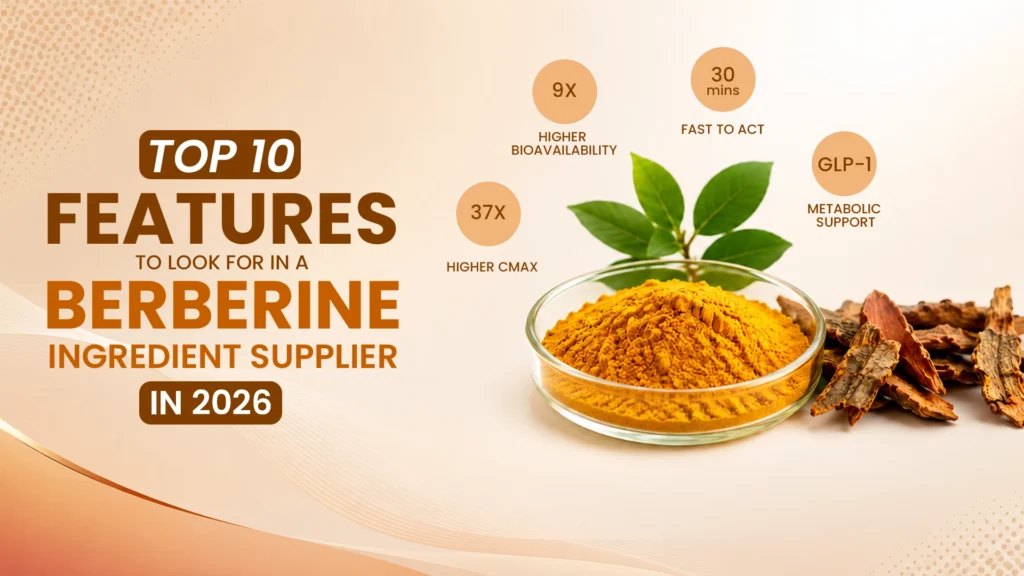
- 37× higher plasma concentration compared to standard berberine
- 9× greater bioavailability for improved glucose metabolism support
- 8× faster absorption, supporting quicker metabolic action
- Effective at just 200 mg/day, versus multi-gram doses of standard berberine
- Natural support for GLP-1 pathway activity, AMPK activation, and insulin sensitivity
As the natural GLP-1 category matures, ingredient suppliers who can offer both scientific credibility and formulation practicality will define the next generation of metabolic health products. Metaberine® is built for exactly that role, giving supplement brands a Metaberine® GLP-1 ingredient story backed by real pharmacokinetic data rather than category hype.
Ready to formulate with bioavailable berberine? Contact Zeus Hygia to request technical documentation and samples for Metaberine®, or explore our full
ingredients portfolio.