What Is Standard Berberine?
Standard berberine is an isoquinoline alkaloid extracted primarily from plants such as
Berberis aristata, goldenseal, and barberry. It has a long history of use in traditional medicine systems and has become one of the most researched botanical compounds for
metabolic health ingredient applications, with studies examining its role in glucose metabolism, lipid balance, and cardiovascular support.For supplement brands, standard, non-enhanced berberine extract is typically standardized to a percentage of berberine hydrochloride (often 97%+) and sold as a
bulk berberine powder or capsule-ready raw material. It is widely available, relatively inexpensive per kilogram, and has decades of traditional and clinical usage behind it, which is exactly why so many
berberine ingredient supplier catalogs still list it as a baseline offering.But raw purity is not the same as delivered efficacy, and that distinction is where standard berberine runs into trouble.
The Bioavailability Challenge
Berberine’s central limitation is not its biological activity, it’s getting enough of it into the bloodstream. A frequently cited
pharmacokinetic review of berberine reports oral bioavailability below 1%, driven by poor aqueous solubility, P-glycoprotein-mediated efflux in the intestine, and extensive first-pass hepatic metabolism.In practical formulation terms, this means:
- Clinically studied doses of standard berberine often range from 900mg to 1,500mg per day, split into multiple servings
- High-dose berberine is associated with a higher incidence of gastrointestinal discomfort, including cramping and diarrhea
- Batch-to-batch variability in raw extract quality can translate into inconsistent absorption
- Large per-serving dosing increases capsule size, capsule count, or powder volume, all of which hurt consumer compliance
For a category as competitive as
weight management ingredient and
blood sugar management ingredient formulations, these friction points directly affect product reviews, repeat purchase rates, and brand credibility.
Why Bioavailability Matters
Bioavailability isn’t a technical footnote, it’s the variable that determines whether a berberine formulation actually works at the dose on the label. Two products can list an identical milligram amount of berberine and produce meaningfully different physiological effects if one uses standard extract and the other uses an enhanced-delivery form.For brands, this has direct commercial implications:
- Substantiation: Bioavailability data supports stronger, more defensible label claims
- Dosing efficiency: Higher bioavailability allows lower per-serving doses, reducing cost-in-use and improving format flexibility (capsules, gummies, powders)
- Consumer experience: Lower doses generally mean fewer gastric side effects and better compliance
- Differentiation: In a crowded berberine category, a documented bioavailability advantage is one of the few genuinely defensible points of difference
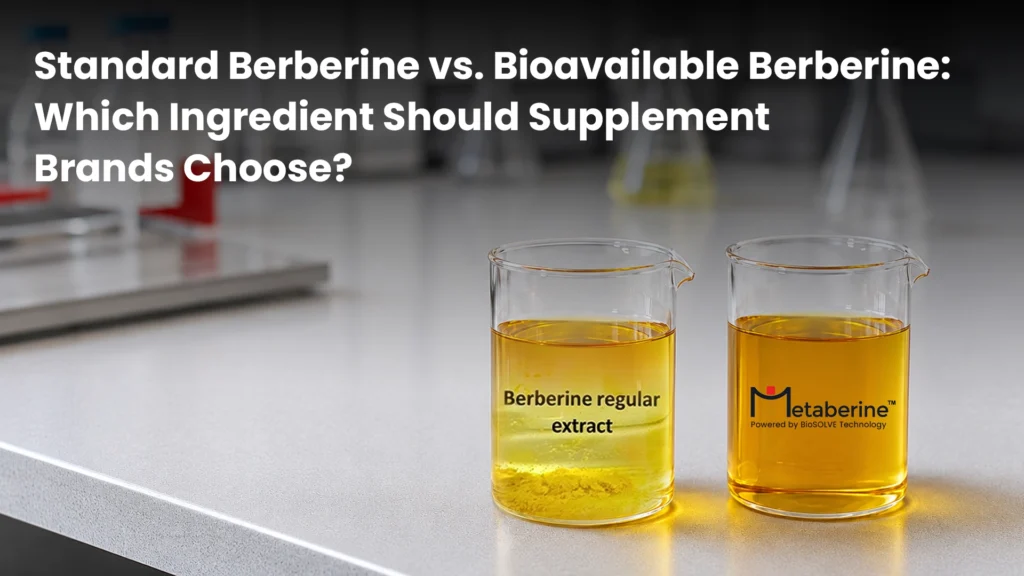
Standard Berberine vs. Metaberine® Comparison
| Factor | Standard Berberine | Metaberine® |
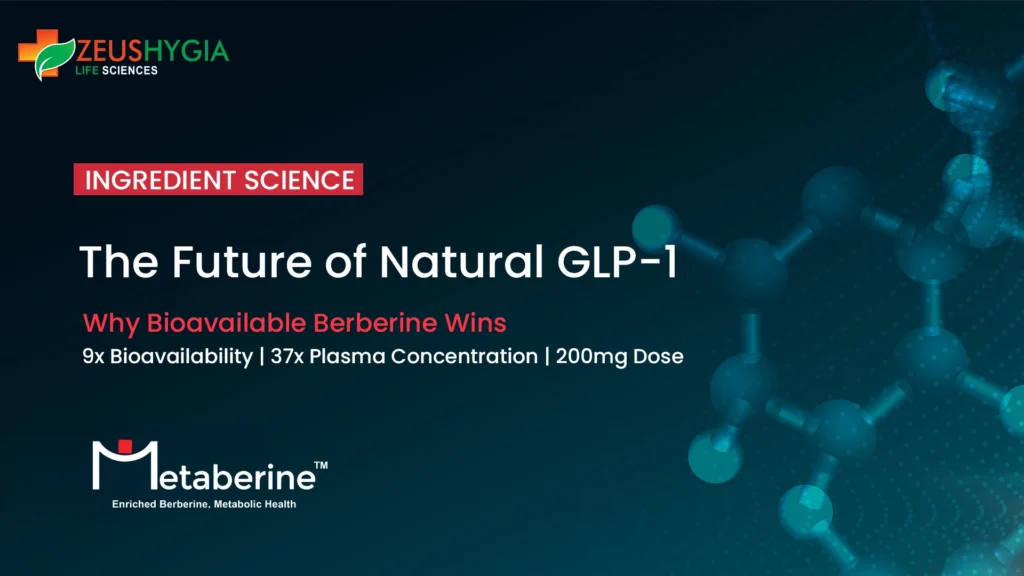
| Oral bioavailability | Less than 1% (native compound) | 9× greater bioavailability |
| Peak plasma concentration | Baseline | 37× higher plasma concentration |
| Absorption speed | Slow, variable | 8× faster absorption |
| Typical effective daily dose | 900mg–1,500mg+ | 200mg |
| Delivery technology | Standardized dry extract | BioSOLVE™ aqueous, plant-based delivery |
| Gastric tolerability | Higher risk at high doses | Improved at lower effective dose |
| Label claim strength | Limited by absorption data | Supported by pharmacokinetic differentiation |
What Supplement Manufacturers Should Consider
When evaluating a
berberine extract manufacturer or ingredient supplier, brands should look beyond percentage purity alone and ask a more complete set of questions:
- What pharmacokinetic or bioavailability data supports this ingredient’s absorption claims?
- What is the clinically effective dose, and how does that compare to competitor formulations?
- Is the delivery technology proprietary, patentable, or otherwise defensible for marketing purposes?
- Does the supplier provide technical documentation suitable for regulatory and label substantiation?
- Can the ingredient support GLP-1-adjacent, insulin sensitivity, or PCOS-related product positioning with credible science?
For brands building next-generation formulations in the
GLP-1 support ingredient and metabolic health space, the choice increasingly comes down to standard, high-dose berberine versus a bioavailable alternative engineered for real-world performance.
Metaberine® was developed specifically to close that gap, offering supplement manufacturers a
standardized berberine extract alternative with pharmacokinetic data to back it up.Explore our
full breakdown of GLP-1 and Metaberine®, or
reach out to our team for technical data sheets and formulation support.